Nişantaşı
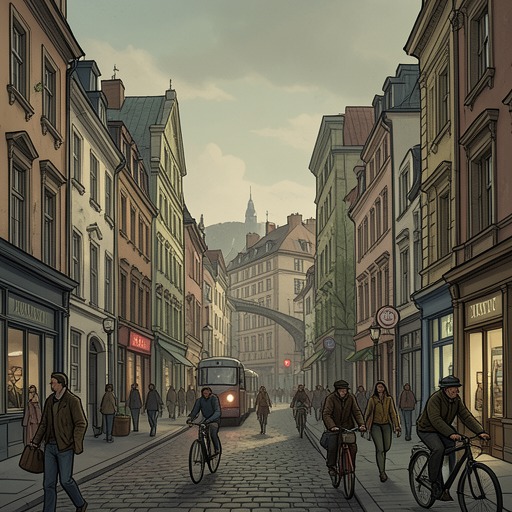
The Museum of InnocenceNişantaşı is the affluent Istanbul neighborhood where Kemal Basmacı’s public life with Sibel Hanım and his secret attachment to Füsun first become entangled. Its boutiques, apartment buildings, and familiar streets give his love story a physical map: at first a landscape of privilege and social plans, later a network of prohibited places, remembered encounters, and painful returns. As Kemal’s feelings alter, the same streets shift from ordinary routes into instruments of avoidance and longing.
Setting and Social Geography
Nişantaşı is presented as one of Istanbul’s prosperous districts, associated with boutiques, imported fashion, restaurants, and the search for desirable apartments with views of the Bosphorus. The neighborhood is not merely a marker of Kemal’s class position. It is where social life takes a visible, organized form: engagements are planned over dinner, friends meet at parties, and couples imagine future homes by examining unfinished apartments. Such spaces make the district a setting for both public performance and private unease.
Its consumer world is especially clear in the account of a boutique window on Valikonağı Avenue. In the spring of 1975, while walking with Sibel Hanım after supper at Fuaye Restaurant, Kemal sees her notice a Jenny Colon handbag. Their formal engagement is approaching, and the couple and their families have already discussed the party, scheduled for mid-June so that Sibel Hanım’s friend Nurcihan can attend from France. The evening’s plans belong to the neighborhood’s polished social order; the handbag, first noticed in its shop window, becomes the chance object that draws Kemal into an affair that will overturn that order.
The district’s boutiques catered to affluent women and sold imported goods or copies of fashionable European designs at inflated prices. The Jenny Colon handbag belongs to that commercial setting, but its importance exceeds its price. Kemal returns to the shop the next day after remembering Sibel Hanım’s admiration of it. His visit begins as a gesture toward his fiancée and becomes the point of contact with Füsun. Nişantaşı thus binds an ordinary act of shopping to a decisive change in Kemal’s life.
The Merhamet Apartments and Private Refuge
At 131 Teşvikiye Avenue, the Merhamet Apartments house a flat belonging to Kemal’s mother. Before going to America, Kemal had used the apartment as a hideout where he could study and listen to music. Later, it became part of his established routine: he went there at lunchtime, usually between two and four, to shut himself away and catch up on paperwork. The apartment’s privacy makes it a refuge within the neighborhood rather than simply another family address.
That private refuge acquires a different emotional purpose after Kemal’s relationship with Füsun is disrupted. He tries to forbid himself from going to the apartment to wait for her or touch things that recall her. Earlier efforts at restraint had failed because he found pretexts to return to familiar places. He responds by drawing a mental map of Nişantaşı and marking the Şanzelize Boutique, the Merhamet Apartments, a police station, and nearby streets as prohibited areas. The map turns remembered geography into a system of self-imposed boundaries.
Kuyulu Bostan Street, where Füsun and her family live, also becomes forbidden. One night Kemal, having been drinking, walks in that direction despite his misgivings. He stops before reaching the house and watches its distant, illuminated second-floor windows, which can be reached by a chestnut tree. The visit does not bring him into contact with Füsun; distance is the condition of the scene. Even a glimpse of the windows makes his heart pound, showing how a familiar street can carry the force of an encounter without allowing one to happen.
The boundaries prove difficult to keep. When Kemal later believes that he is recovering, he ventures into streets he had marked in red. Passing shops where his mother once took him as a child initially reassures him, but seeing the Şanzelize Boutique from a distance unsettles him. After breakfast with Sibel Hanım, the two agree to leave their house and stay away from Nişantaşı and its streets for a long while. Their decision makes the red and orange restrictions more than a private map: they become a shared attempt to alter the couple’s surroundings in order to manage Kemal’s distress.
Routes, Returns, and the City of Memory
The neighborhood’s routes register Kemal’s changing relation to ordinary social life. While he and Sibel Hanım look at unfinished apartments in the hills above Bebek and Arnavutköy or in the emerging district of Etiler, he joins her in imagining where their furniture might go and how the rooms would frame a view of the Bosphorus. At evening parties, however, Sibel Hanım continues discussing the new neighborhoods and their advantages while Kemal shifts the conversation toward football, Meltem soda, or the summer’s bars and restaurants. His outward participation in their plans coexists with a growing withdrawal: friends notice that he has become quieter, though he does not then recognize the sorrow behind the change.
After the engagement breaks down, Nişantaşı remains both a place he avoids and a place to which he returns. Kemal wanders through forbidden streets and visits the Merhamet Apartments several times a week, seeking the peace of his memories. He also frequents crowded places where he hopes to glimpse what he experiences as Füsun’s ghost. Those sightings last only moments and do not reunite them; nevertheless, he begins marking the locations where they occur on his mental map of Istanbul. The city becomes a constellation of signs associated with her, and his movements through it follow memory as much as practical need.
His search eventually carries him beyond Nişantaşı into the older, poorer neighborhoods of Vefa, Zeyrek, Fatih, and Kocamustafapaşa. That expansion makes the district part of a larger personal geography: Nişantaşı is the origin point of his routes and prohibitions, but not their limit. The search changes how he experiences the city. Streets that once served as familiar passages or sites of social life become charged by the possibility of seeing Füsun, even when the sight proves to be an illusion.
Domestic Routines and Contrasting Time
Nişantaşı also anchors the contrast between Kemal’s customary family life and the repeated dinners he later attends at Füsun’s home in Çukurcuma. The Merhamet Apartments are his secluded daytime retreat; the Keskin household is the destination of an evening routine that eventually occupies seven years and ten months. Between October 23, 1976, and August 26, 1984, Kemal makes 1,593 supper visits across 2,864 days. His journeys begin in Nişantaşı, where Çetin picks him up shortly before seven, and continue through Harbiye, Taksim, Sıraselviler, Cihangir, and Firuzağa toward Çukurcuma.
These journeys show the district functioning as a point of departure from which Kemal enters another household’s rhythms. On roughly every other visit, he brings Füsun a small present, such as Chiclets or a brooch or barrette decorated with butterflies. At the Keskin home he may remain until around midnight, when the television broadcast ends with a four-minute closing ceremony. The measured repetition of that faraway routine throws Nişantaşı’s own routines into relief: Kemal’s life there is increasingly shaped not by the future home he once imagined with Sibel Hanım, but by the repeated route away from it.
Closure and Retrospective Significance
The neighborhood’s shops and buildings also mark time through their disappearance or alteration. Around the time Kemal notices the Şanzelize Boutique has closed, its former window—the one where Sibel Hanım spotted the handbag nine years earlier—contains Italian salamis, yellow cheeses, bottled dressings, pasta, and soft drinks entering the Turkish market. The changed display makes the passage of time visible in a familiar frame. Kemal feels not only the loss of his own memories but the sense that life has continued without him.
Family news has a related effect. Conversations with his mother about marriages and children, once a source of ordinary pleasure, begin to unsettle him by reminding him that he did not share his life with Füsun. In Nişantaşı, domestic gossip and commercial change become measures of a future from which he feels excluded. The district’s ordinary continuity contrasts with his emotional fixation: shops change, children grow up, and other people’s lives advance while he remains oriented toward the past.
In the novel’s retrospective frame, Nişantaşı persists as a lived neighborhood rather than a static backdrop. After Kemal’s death, the narrator’s inquiries bring him into contact with people connected to Kemal and Füsun, and he walks through the night with Kemal toward the Pamuk Apartments. Kemal says he will stay with his mother in Teşvikiye rather than at the museum that night. The return to a family home in the district gives Nişantaşı a final, quieter significance: it remains a place of residence and personal history even after Kemal’s obsessive map of desire has been preserved elsewhere. Its streets hold the material traces of change, while his remembered routes make the neighborhood inseparable from the life he could not leave behind.